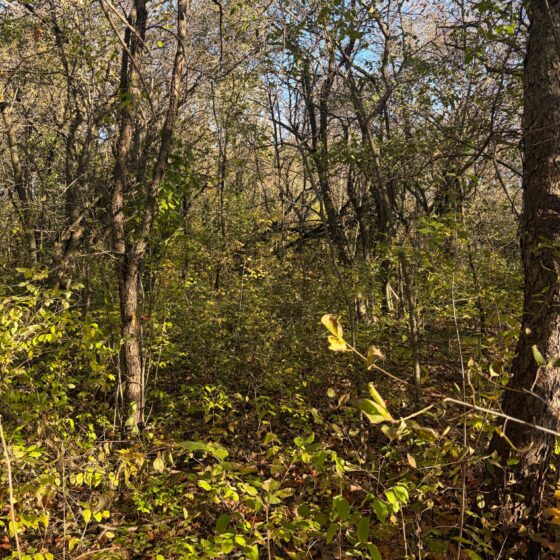
Fort Drum — Herbicide Treatment and Invasive Vegetation Management
Herbicide treatment and invasive vegetation management at Fort Drum during the 2026 season, supported by crew coordination, installation access planning, and spatial field documentation.
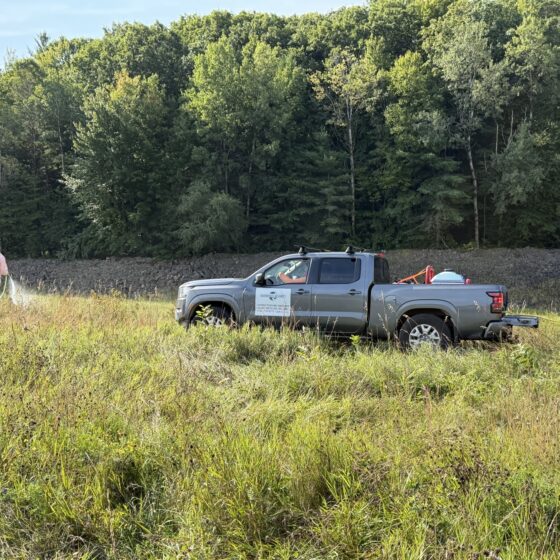
Hopkinton and Everett Lakes — Invasive Plant Management
Invasive plant management across two USACE project areas in New Hampshire, with coordinated staffing, treatment schedules, site safety, and agency communication.
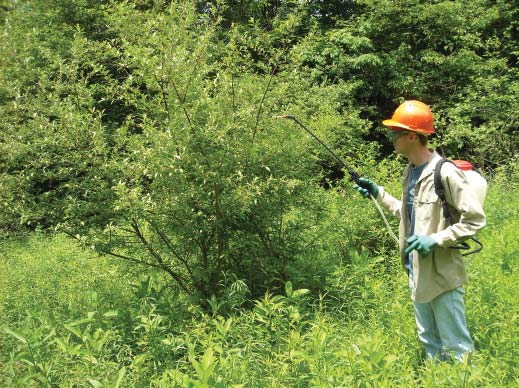
Franklin Falls Dam — Invasive Species Control
Invasive plant control for the U.S. Army Corps of Engineers at Franklin Falls Dam, New Hampshire, combining coordinated field treatment with herbicide-use documentation.
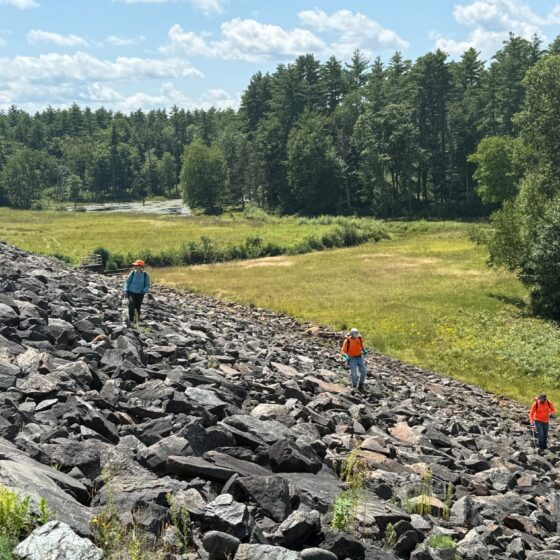
Birch Hill Dam – Chemical Vegetation Control and Environmental Compliance
Chemical vegetation control at Birch Hill Dam for USACE, integrating environmental permitting, targeted herbicide treatment, GIS mapping, and chemical utilization reporting.

Fort Drum – Cantonment Area Herbicide Application
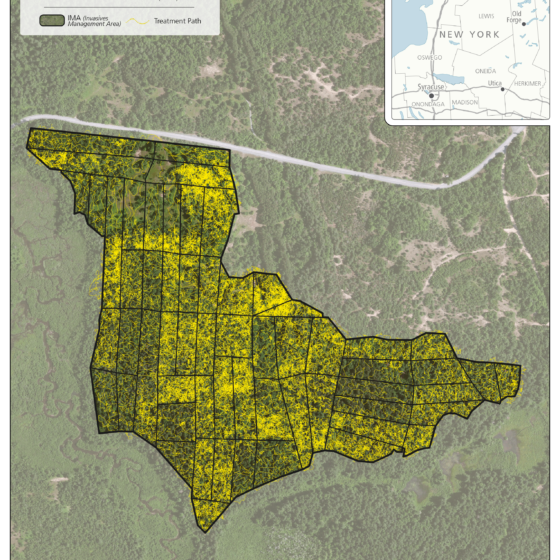
Adirondack Research implemented a large-scale understory invasive species management program across the cantonment area of Fort Drum, treating approximately 64 acres across multiple Invasive Management Areas (IMAs). The project focused on reducing dense invasive shrub layers to support native regeneration, improve forest structure, and enhance habitat conditions within highly managed landscapes. Design map to emphasize treatment intensity, spatial coverage, and operational...
Fort Drum Beech Control – Hack-and-Squirt Herbicide Treatment
American beech (Fagus grandifolia) can become an undesirable species in managed forest systems when it forms dense understory thickets that suppress regeneration of desired tree species. At Fort Drum, this condition is common in previously harvested areas, where beech root sprouting has resulted in high-density regeneration that limits forest diversity and habitat quality. In 2025, Adirondack Research partnered with Atlas Contracting...

Ezra Schwartzberg. Ph.D.
CEO
Ezra is originally from Saranac Lake and spent 10 years working in academia in Kentucky, Pennsylvania and Wisconsin. Ezra moved back to Saranac Lake in 2012 with a goal to use his passion for research to improve regional social and environmental issues.
Ezra uses research expertise to guide our processes, including program design, data analysis and project evaluation. By combining ecological research with print and digital media, Adirondack Research is able to communicate science to help our clients reach their policy goals.
Ezra’s work with the Intervale Lowlands Preserve in Lake Placid recently won an Environmental Excellence Award from the New York State Department of Environmental Conservation and his work with Adirondack Council and Adirondack Action is changing the way policy advocates use science in state and regional decision-making.
Ezra’s Curriculum Vita can be viewed here
Roman Perkhaliuk

Boris Vitlic

Randall Swanson
Louise Gava